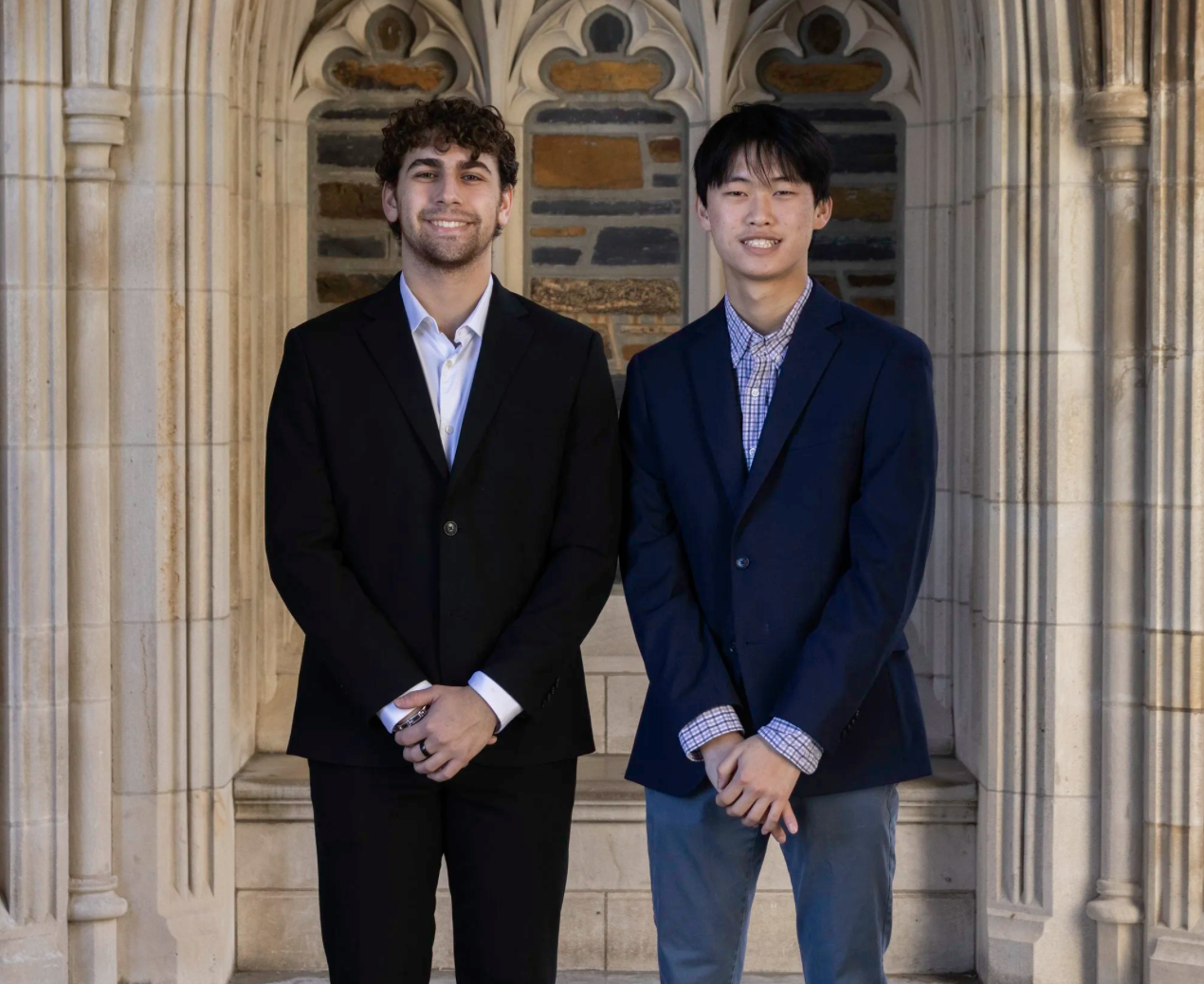
Josh Rabbani
Computer Science, AI/ML, and Math
Building apps and trying to add value to society.
Technical Arsenal
Relevant Coursework
CS 372
Intro Applied Machine Learning
Applied machine learning course covering model development, evaluation, and practical ML workflows.
MATH 466
Math of Machine Learning
Mathematical foundations of machine learning, including linear algebra, optimization, probability, and model analysis.
CS 376
Computational Approaches to Human Language
Natural language processing course focused on computational methods for analyzing and modeling human language.
CS 370
AI/ML Applications
Machine learning algorithms, artificial intelligence concepts, and practical applications.
CS 330
Design and Analysis of Algorithms
Advanced algorithmic techniques including sorting, searching, dynamic programming, graph algorithms, and computational complexity analysis.
CS 316
Database Systems
Database design, SQL, transaction processing, and modern database management systems.
STA 199
Introduction to Data Science
Statistical analysis, data visualization, and computational methods for extracting insights from data.
STA 240L
Probability for Statistics
Mathematical foundations of probability theory with applications to statistical inference and data analysis.
MATH 216
Linear Algebra
Vector spaces, linear transformations, eigenvalues, and applications to computer science and statistics.
MATH 212
Multivariable Calculus
Calculus of several variables, including vectors, partial derivatives, multiple integrals, and applications.
CS 201
Data Structures & Algorithms
Advanced data structures, algorithm analysis, and problem-solving techniques for software development.
CS 250
Computer Architecture
Digital logic, processor design, memory systems, and assembly language programming.
CS 230
Discrete Math
Mathematical foundations for computer science including logic, sets, relations, functions, and proof techniques.
PSY 490S
What Makes Us Human?
Special topics seminar in psychology exploring the uniqueness of human social learning and joint attention.
SPAN 302
Spanish Grammar & Composition
Advanced grammatical structures, composition techniques, and linguistic analysis of the Spanish language.
Featured Projects
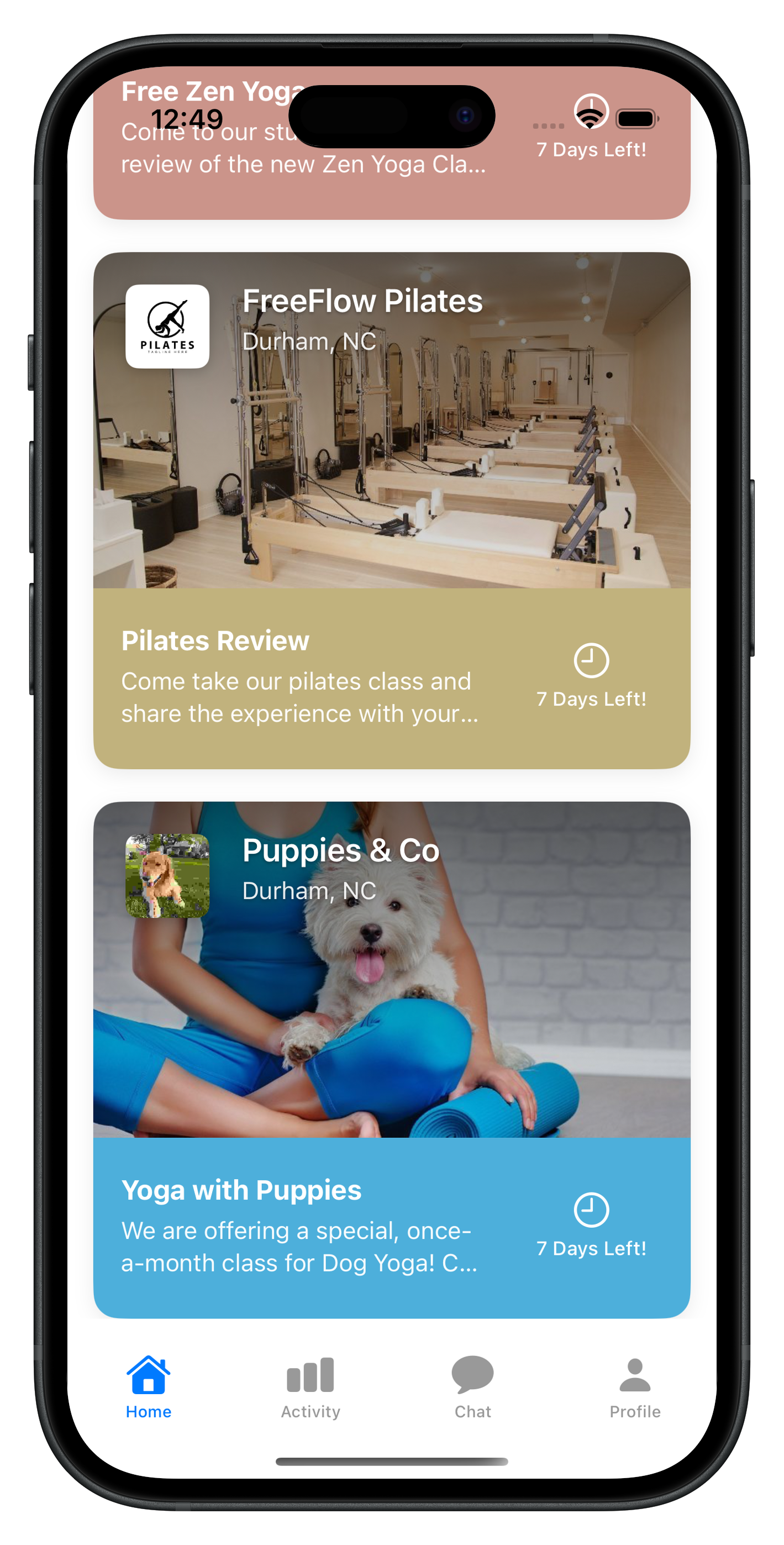
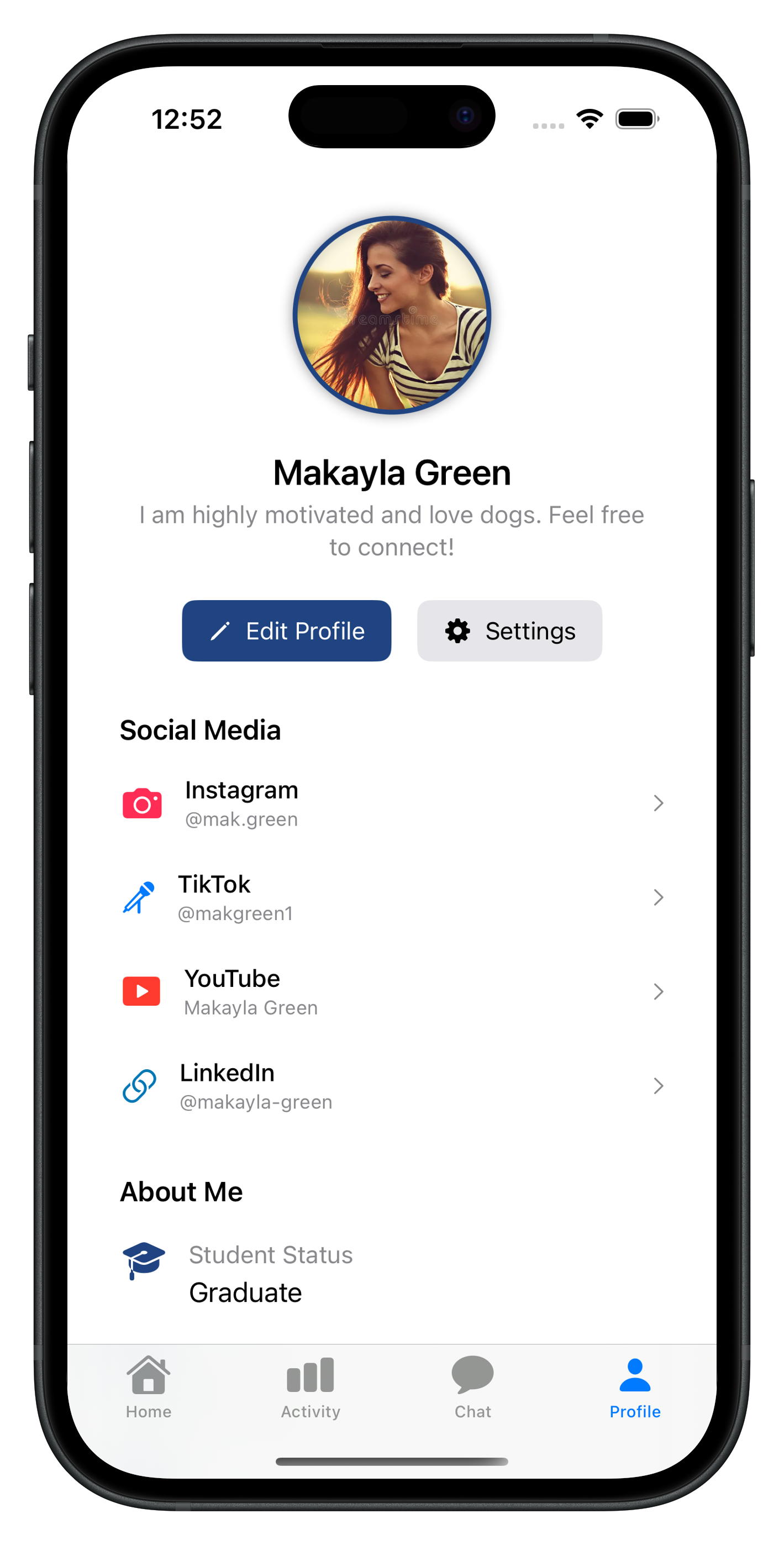
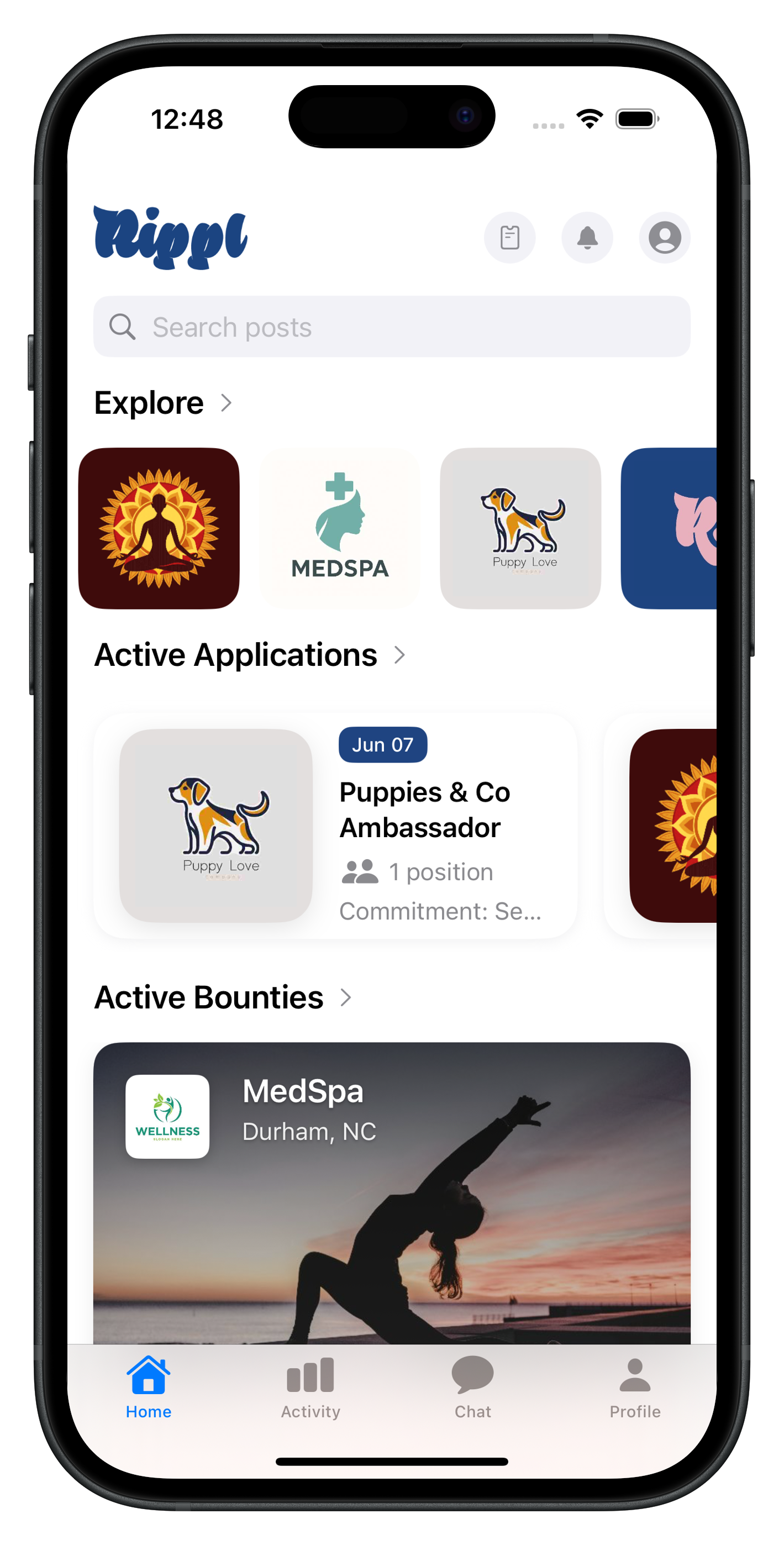
Full-stack platform connecting local businesses with student brand ambassadors, streamlining marketing campaigns and microinfluencing by students. Built with modern web technologies and robust database architecture.
Frontend Architecture
- • Next.js Application
- • Atomic Design Components
- • Tailwind CSS Styling
- • Responsive UI Design
Backend Systems
- • Supabase Integration
- • PostgreSQL Database
- • Row-level Security
- • Real-time Analytics
Key Features
- • User Authentication & Profiles
- • Application Tracking System
- • Campaign Management Dashboard
- • Performance Metrics & Analytics
Mobile app screenshots
Order Processing Application for Restaurants
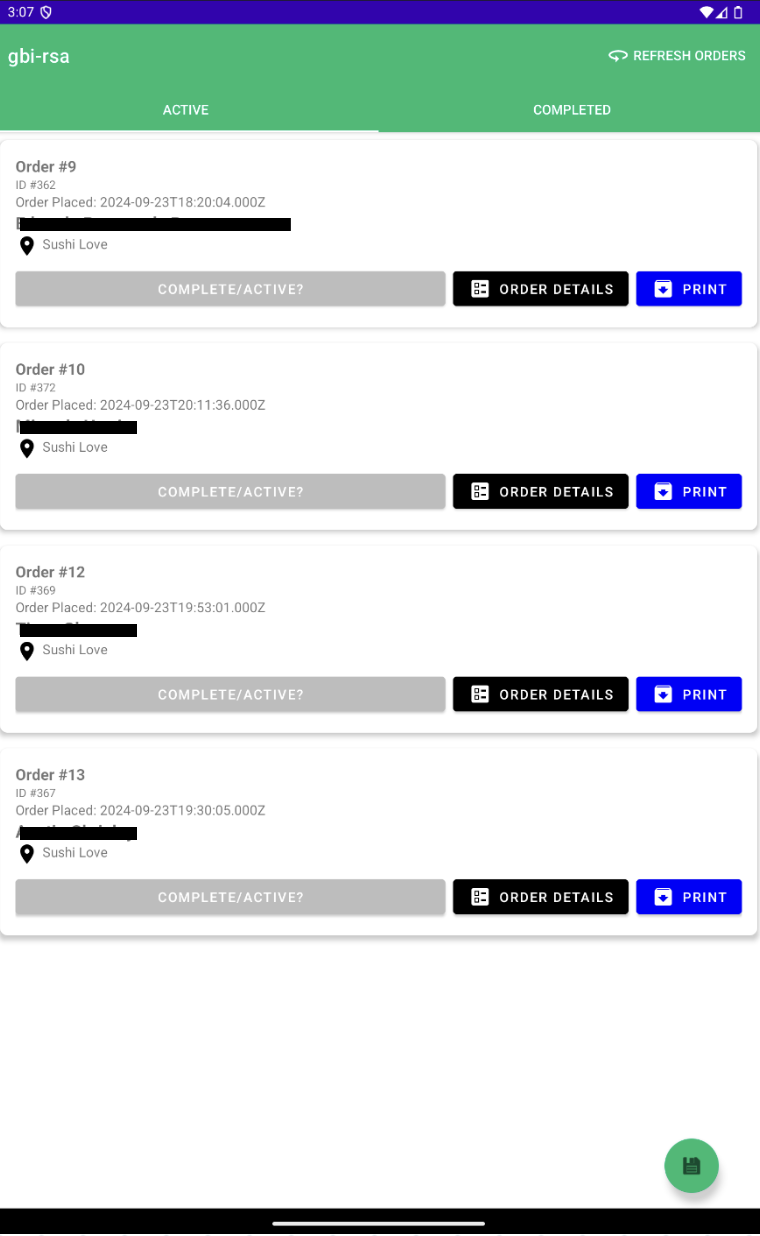
Full-stack Android application streamlining meal order processing by Duke students and printing receipts for Durham restaurants in a $120K annual revenue business. Built with hardware integration for StarXpand printers, supporting restaurant operations.
Frontend & Mobile
- • Kotlin Android Application
- • Dynamic Fragment Management
- • Minimalistic, Accessible UI
- • Real-time Order Processing
Hardware Integration
- • Star Micronics StarXpand SDK
- • LAN-based Receipt Printing
- • Multi-protocol: Bluetooth & USB
- • Asynchronous Print Operations
Business Impact
- • Powers $120K+ Annual Revenue Business
- • Streamlined Restaurant Operations
- • Real-time Order Management System
Tablet screenshot

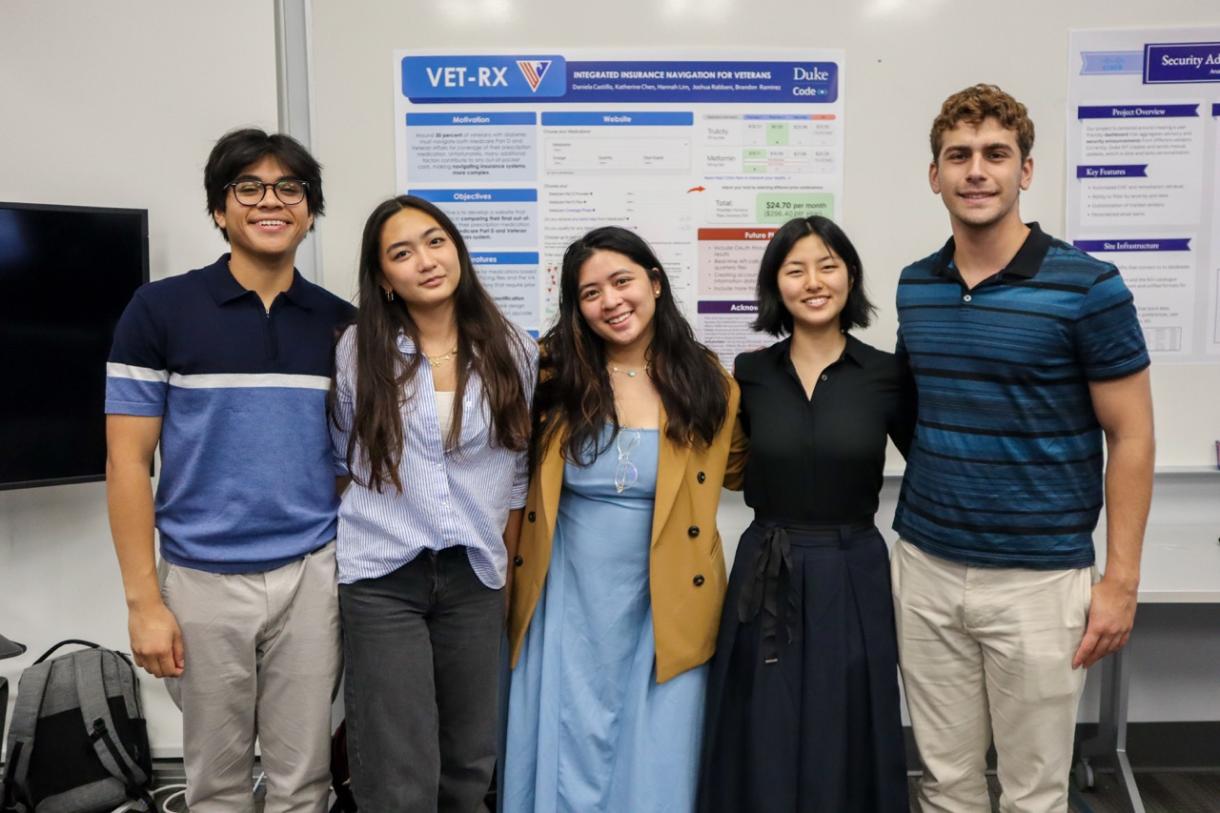
Developed and deployed a web tool within 10 weeks aiming to help 1.2 million veterans navigate insurance options to find the lowest-cost diabetes medications, sponsored by Microsoft and the U.S. Department of Veterans Affairs through Duke Office of Information Technology (OIT) Code+ program.
Frontend Development
- • Next.js Single-page App
- • Atomic Design Components
- • Wireframed questionnaire for scalability
- • Accessibility-focused UI design
Backend & Data
- • Ruby on Rails API
- • PostgreSQL Database
- • 40GB → 500MB Data Cleaning
- • Robust API interactions
Project Impact
- • Serves 1.2 Million Veterans
- • Microsoft & VA Sponsored
- • 10-Week Development Timeline
Final Presentation
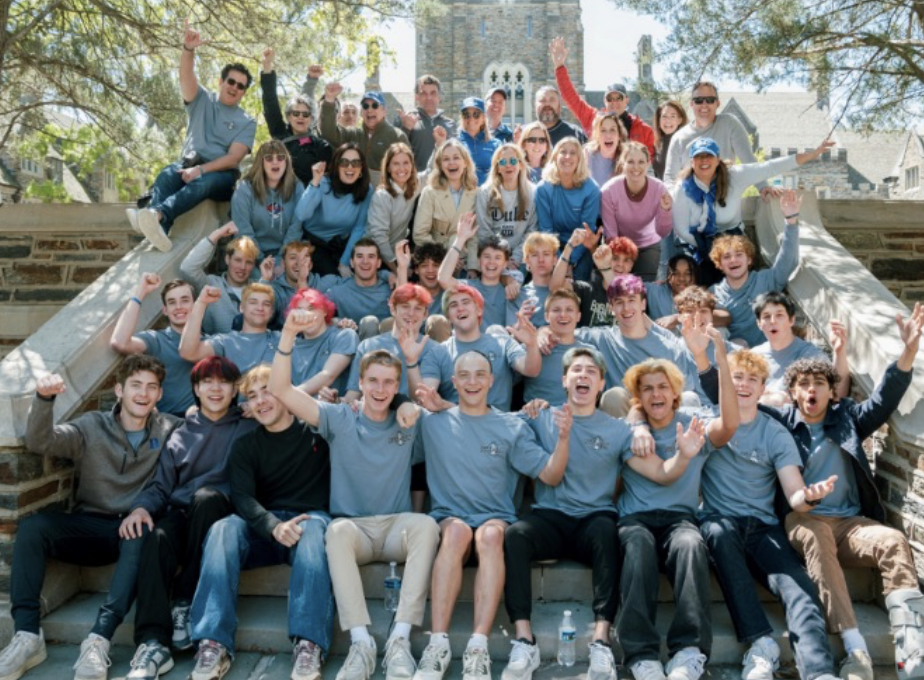
Team Photo

Full-stack safe navigation platform developed during the 2024 Hack Duke hackathon specifically for Durham, NC using React, Python, and OpenStreetMap, analyzing 7.7M historical traffic accidents across 49 states (2016-2023) to compute Durham-specific safety scores. Features custom pathfinding algorithms for safety-optimized routing in a 24-hour development sprint.
Backend & Algorithms
- • Python Data Processing
- • NetworkX & OSMnx Integration
- • Custom Pathfinding Algorithm
- • Kaggle accident dataset analysis
Technical Achievements
- • 7.7M Accident Data Points Analyzed
- • Risk-weighted Route Optimization
- • Folium Map Visualization
- • Location Presets & User Experience
Application screenshots

Hackathon Presentation

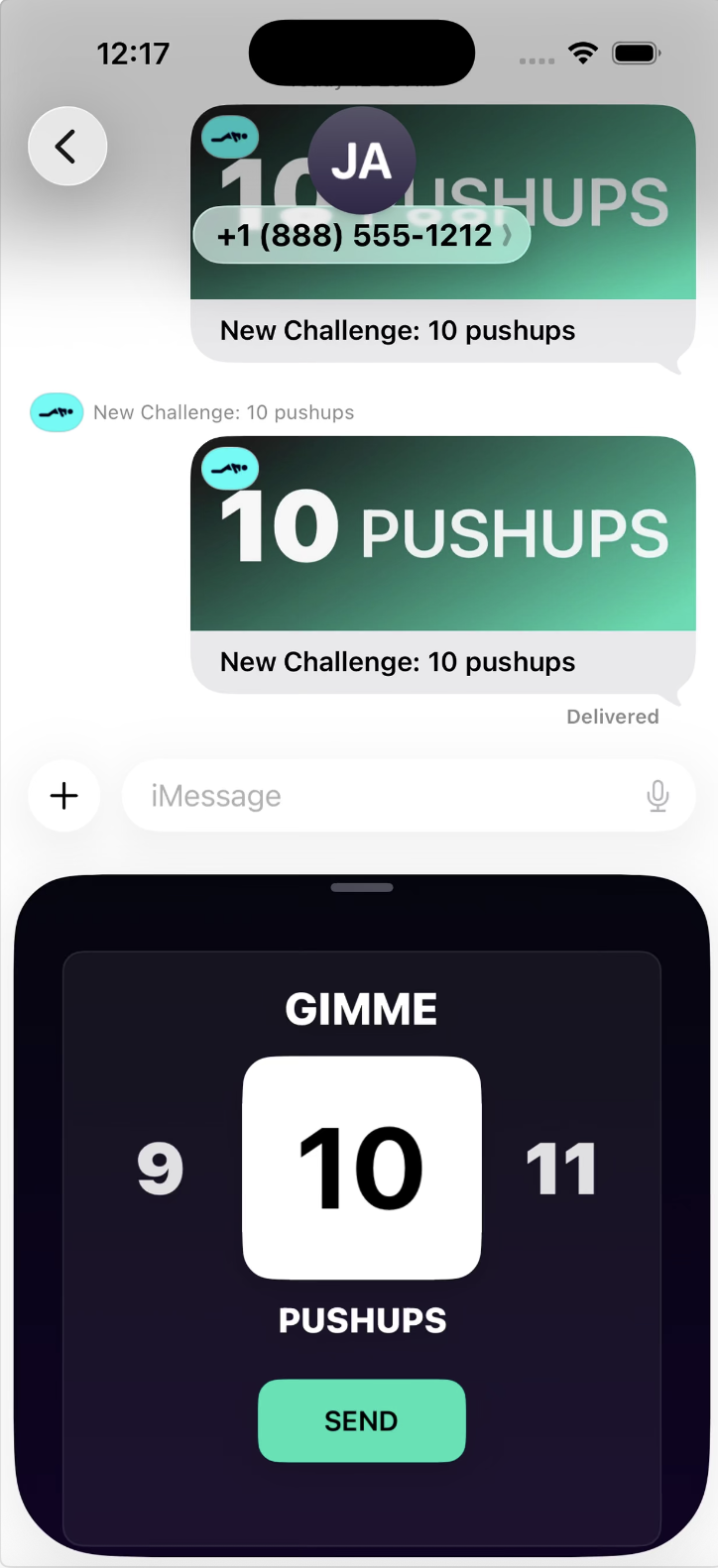
iMessage Extension that lets users challenge their friends to pushup challenges! The inspiration behind this was that I was feeling too stagnant at home, and the 'If you'll do it, I'll do it!' mentality works on me. Thus, Gimme 10 was born to get me to do more pushups.
Application screenshot

End-to-end plant identification and information system built around Duke University's Sarah P. Duke Gardens. Users upload a plant photo, and the system identifies the species using a fine-tuned ResNet18 image classifier trained on species native to Duke Gardens, then answers natural language questions through a RAG pipeline backed by a Wikipedia-sourced plant knowledge base.
Computer Vision
- • ResNet18 fine-tuned classifier
- • 102 plant species from Duke Gardens
- • ~22,000 training images sourced via iNaturalist
- • 65.7% test accuracy on held-out data
RAG & Language System
- • Wikipedia-sourced plant knowledge base
- • sentence-transformers/all-MiniLM-L6-v2 embeddings
- • Cosine similarity retrieval
- • Phi-2 local answer generation on GPU
Project Scope
- • Built as an individual project
- • Combines computer vision, semantic retrieval, and language generation
- • Designed as the foundation for a future app with plant discovery tracking
Repository
Source code, notebooks, data layout, and setup instructions for the CS 372 final project (Flask app, classifier, and RAG pipeline).
Open on GitHubAdditional Projects & Presentations
Durham Diner Operations Analysis for Efficiency
Simulated restaurant operations to evaluate efficiency trade-offs using a Poisson arrival model and exponential service time distribution. Analyzed customer flow, wait times, and revenue across 300 simulation runs to determine optimal staffing and table configuration for maximizing profit and satisfaction.
Key Takeaways
- • Modeled customer arrivals as a Poisson process and service times using an exponential distribution
- • Ran 100 simulations across 3 distinct scenarios: varying chefs, tables, and both
- • Identified optimal configuration: 2 chefs and 5 tables, balancing near-zero wait time and maximum profit
- • Quantified downtime, wait time distributions, and service throughput to inform strategic resource allocation
Food Accessibility in the US
Investigated how population density correlates with food insecurity across US states using USDA and census-derived data. Focused on proportions of county populations residing 10+ miles from a supermarket, with emphasis on North Carolina. Used R for data wrangling, mapping, and statistical modeling to reveal geographic and socioeconomic disparities in food access.
Key Takeaways
- • Used state-level population and access data from USDA and the US Census via the CORGIS dataset
- • Created choropleth maps and scatter plots in R to visualize total vs. proportional low-access populations across states
- • Performed linear regression showing a significant negative correlation between population density and food inaccessibility (p < 0.001)
- • Highlighted disparities in rural vs. urban states, where sparsely populated states (e.g., North Dakota) show >15% low access
Room Scout
LiDAR-powered room scanning platform for student housing decisions. Won audience favorite in the Duke I&E Quad Cup competition and secured dinner with faculty.
Campus Involvement
Leadership, education, and service.

Shave and Buzz
Vice President
Raising funds and awareness for pediatric cancer research through fundraising and solidarity events

SHAPE (Sexual Health and Peer Education)
Vice President (Greek Life)
Providing education and generating campus dialogue about sexual health and sexual assault awareness

Campus Enterprises
Student Developer
Duke University's oldest student-run business, operating multiple campus services while providing students with hands-on entrepreneurial and technical experience.
Making a Difference Beyond Campus
My involvement with Shave and Buzz connects to a larger mission of supporting cancer patients and their families. Learn more about the foundation that inspired our campus organization.
Visit I'm Not Done Yet FoundationLet's Build Something Together
I like building and making impactful projects. Let's connect and discuss opportunities.